
Origins & the Hollywoodland Vision
Beachwood Canyon lies along the eastern slope of the Hollywood Hills, with its upper portion historically known as Hollywoodland, a name that once graced the iconic sign. The Hollywoodland real estate development began in 1923 (completed by 1925), under the direction of a syndicate led by Harry Chandler, Gen. M. H. Sherman, and Sidney Woodruff. The original sign spelled out “HOLLYWOODLAND” to promote the subdivision, later shortened to “Hollywood” in 1949.
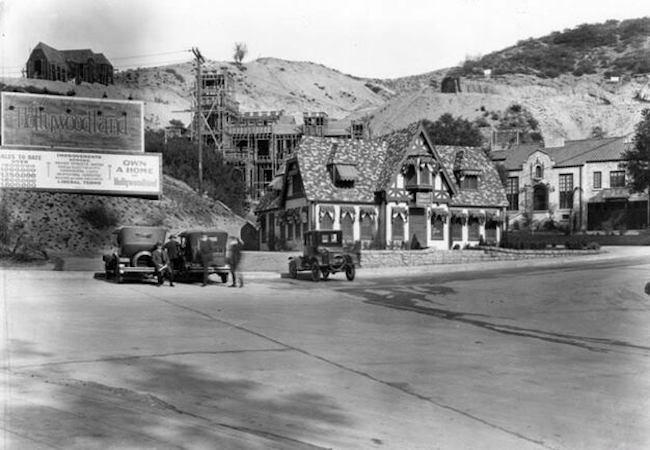
From its earliest days, Beachwood was marketed as a hillside refuge for creative professionals, a “country environment above the city” with shuttle access to the studios below. Its architecture and landscaping drew inspiration from southern France, Italy, Spain, and even German castles, influencing the region’s eclectic, romantic style.
Earlier, the area was more wild and undeveloped home to scrub, wildlife, and open ridgelines. The nearby Krotona Colony, a theosophical retreat from 1911 to the mid-1920s, left an imprint of visionary architecture and spiritual idealism in the upper reaches of the canyon.
One particularly interesting historic structure is the Moorish four-family residence at 2260 Beachwood Drive, built in 1925 by illustrator John C. Hill and his wife Delia. It featured Philippine mahogany, tiled baths, and sleeping porches, an early example of the romantic, storybook aesthetic in the canyon.
Boundaries, Topography & Views
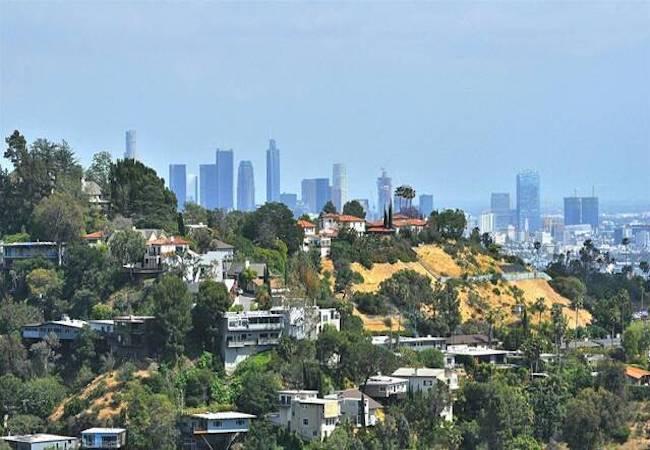
Beachwood Canyon stretches roughly from Franklin Avenue uphill toward Mount Lee (the Hollywood Sign) and covers steep, winding terrain along Beachwood Drive. The original development included narrow roads, retaining walls, paths, and staircases cut into the hillside.
Because of its elevation and orientation, many homes enjoy sweeping views: Downtown L.A., Griffith Park, the Pacific Ocean on clear days, and of course, front-row vantage toward the Hollywood Sign. The route “north up Gower Street to Beachwood Drive” is among the most scenic pedestrian approaches to within 300 feet of the sign.
Architecture & Historic Protection
The architectural tapestry of Beachwood is diverse and enchanting: Spanish Colonial Revival, Mediterranean, English cottage, French Normandy, storybook, and mid-century modern homes perch alongside hillside “cliffhanger” designs.
Because modern houses and dramatic hillside excavations threatened the visual harmony, the neighborhood now includes a Historic Preservation Overlay Zone (HPOZ). New construction and remodels typically undergo a design review to ensure they respect the canyon’s original character.
Culture, Nature & Outdoor Life
Beachwood feels like a canyon retreat inside the city. Tucked staircases, pilgrimage-like paths, quiet ridgelines, and pedestrian-friendly passages make it ideal for walking or hiking. The six sets of stone staircases built in the 1920s by Italian stonemasons remain a hallmark of local lore and exercise routes.
Residents often hike to Lake Hollywood, traverse trails into Griffith Park, or stroll through neighborhood greens. For those seeking recreation, Sunset Ranch Hollywood Stables offers horseback rides in adjacent hill country.
Despite its peaceful veneer, Beachwood is only a short drive from the bustle of Hollywood, Sunset Strip, Silver Lake, and much of the city, giving people the balance of escape and access.
Historic & Cultural Legacy
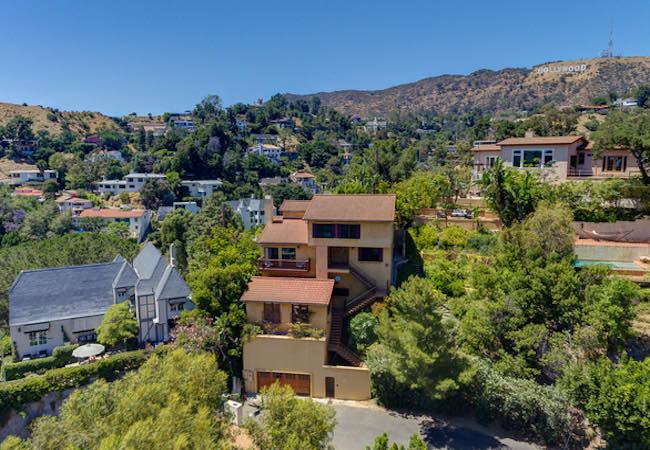
Beachwood, and specifically Hollywoodland, has been home to many film legends and cultural figures. Among its past and more recent residents: Rudolph Valentino, Humphrey Bogart, Charlie Chaplin, Carole Lombard, and recent creatives like Anna Kendrick, Forest Whitaker, Keanu Reeves.
It has also featured in film and television: for example, scenes from the 1956 film Invasion of the Body Snatchers were shot down Belden Drive in Beachwood.
One of the more famous homes is a mid-century A-frame chalet at 6105 Mulholland Highway, considered the closest house to the Hollywood Sign.
Neighborhood Character & Appeal
Beachwood Canyon feels cinematic, its winding roads, hidden paths, hillside greenery, and architectural poetry give it an immersive quality. Many residents say it “feels miles removed” even though the city is within reach.
Because the canyon restricts through traffic, much of it remains pedestrian-friendly and quiet. Local markets, cafés, and intimate shops serve daily needs; the sense is one of a self-contained hillside village.
The co-existence of old and new storybook bungalows, hillside moderns, design-forward homes, makes the neighborhood dynamic yet rooted. For those seeking a home with character, views, and a touch of Hollywood history, it delivers in spades.
Market Appeal & Legacy
Beachwood Canyon remains one of Los Angeles’ most distinctive residential enclaves. The factors attracting buyers include:
*Historic charm with hillside allure and architectural diversity
*Iconic landmark proximity (Hollywood Sign views, hillside prestige)
*HPOZ safeguards that preserve scale, setbacks, and aesthetics
*Privacy and sense of sanctuary in a central urban context
*A back-story steeped in the Golden Age of Hollywood, Theosophical experimentations, and early thematic planning
Leave a Reply